Clematis Princess Kate – Zoprika
Following a negative Covid-19 test yesterday. Sean paid me a socially distanced visit and as always I was given presents. Firstly two beautiful cushions made by Deb. They match really well with the wallpaper in the bedroom. Secondly a big strong root of Clematis Princess Kate that I have been wanting for a couple of years. Very exciting. I plan on getting the other variety called Princess Diana which is equally beautiful.

This beautiful texensis type Clematis produces upright to nodding, bell-shaped flowers up to 6cm long that flare out widely towards their pointed tips. The petals have an attractive colouring, being white on the inside and stained reddish-purple on the outside. These petals form around rich plum-coloured stamens. The overall effect is very pretty and the plant has the benefit of a long flowering habit. RHS.
This variety was bred from the Clematis texensis, commonly called scarlet leather flower, a climbing vine in the buttercup family native to the United States, where it is endemic to the Edwards Plateau of Texas. Its natural habitat is on rocky limestone cliffs and beside streams. Wikipedia
Clematis Group 3 Care Instructions :- In early spring cut back the previous year’s stems to a pair of strong buds about 6-8″ above ground level and apply a slow-release balanced fertiliser and a mulch of well-rotted garden compost around the plant avoiding the immediate crown. As a group three Clematis Princess Kate should be fast growing and vigorous.
2012 – The Breeder, Wim Snojer and grower J. van Zoest from Boskoop entered Clematis ‘Princess Kate’, in the annual competition and has won best new plant at Plantarium in Boskoop, the Netherlands. Judges from Koninklijke Vereniging voor Boskoopse Culturen said the plant flowers abundantly, bearing upright flowers with a unique shape, and has a well-chosen trade name, in line with other varieties of clematis. Zo – Pri – Ka


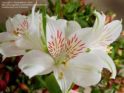 Alstroemeria are very versatile plants and will grow in different situations. All varieties will flower from May through to the first frosts of Autumn and will benefit from the use of a free draining soil. Shorter varieties such as Princess, Inticancha and Little Miss are ideal for the front of the border or for growing in containers. Tall Alstroemeria are good for the back of the border and will provide a continuous supply of cut flowers throughout the summer months. Inca are slightly shorter but will also give long enough stems for cut flowers are good for borders and will also thrive in large containers. Some companies sell loose Alstroemeria rhizomes which is another method of propagation..


 I bought seeds of Lupin Noble Maiden White from Seekay and after an overnight soak they were sown into module trays of damp compost and covered in a polythene bag, I sowed two lots about a week apart and germination has been very good, as with most of the seed from this supplier. It looks like I may not see any flowers this year which is sad. These seedlings have been potted on twice now 25th May, and are producing some good roots.

 I unpacked these rhizomes today and was amazed at how big they were. I had thought that they were expensive at £3.95 for each bulb but having seen them I am filled with confidence of their success. The more I read about these fascinating plants the more I want to know. I had debated about whether to plant each bulb in a separate pot but decided in the end to put all three in a large 40cm patio pot. The directions on the pack say plant in rich potting soil and water sparingly until growth starts. Keep indoors until April and keep frost free. The three varieties that I have planted are Auckland, a beautiful pink, Schwarzwalder, a deep almost black maroon and Albomaculata, white. I can see me buying more of these as they come in an amazing array of colours and are said to have a long flowering period. As with all bulbs grown in containers the soil needs to be changed either every year or every other year.
 Francis Masson, was born in Aberdeen, Scotland in 1741. In the 1760s, he went to work at Kew Gardens as an under-gardener, and was sent abroad to hunt for new plants. He sailed with James Cook on HMS Resolution to South Africa, landing in October 1772. Masson stayed there for three years, during which time he sent back to England more than 500 species of plant – including Zantedeschia . Information from Graham Clarke.
